
How to Choose a Notebook You’ll Actually Use: A Practical Guide
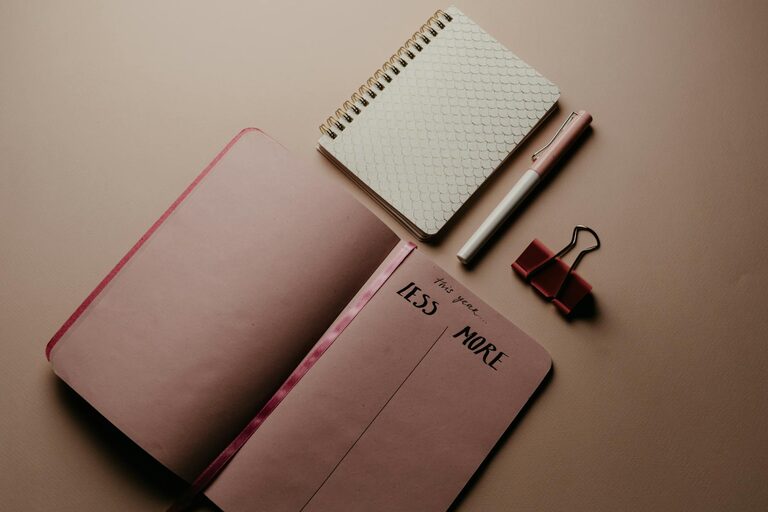
Choosing the right notebook can be surprisingly challenging. With so many sizes, formats, and styles available, it’s easy to end up with a notebook that sits unused on your shelf. But when you find one that truly fits your habits and preferences, your notebook becomes a powerful tool for organizing thoughts, capturing ideas, or simply enjoying the act of writing.
In this post, we’ll break down the key factors to consider when choosing a notebook you’ll actually use.
Why the Right Notebook Matters
A notebook is more than just paper bound together—it supports your creativity, planning, and productivity. When the notebook suits your style, you’ll be motivated to write regularly, track goals, or jot down inspirations as they come. Conversely, a poorly chosen notebook can feel cumbersome, uninspiring, or inadequate for your needs.
Step 1: Identify How You’ll Use Your Notebook
Different purposes call for different notebooks. Start by considering what you want to use your notebook for:
– Daily journaling or diary
– Work notes and meetings
– Creative writing or sketching
– Planning and to-do lists
– Study notes or research
– Travel diary or field notes
Knowing your primary use will guide your choice in size, paper type, and binding.
Step 2: Choose the Right Size
Notebooks come in various sizes. Your ideal size depends on where and how you plan to use it.
– Pocket-sized (A6 or smaller): Easy to carry everywhere, fits in purses or pockets. Great for quick notes on the go, but limited writing space.
– Medium (A5): Popular choice for everyday use; portable yet spacious enough for detailed notes.
– Large (A4 or letter-sized): Suitable for extensive writing, meetings, or sketching, but less portable.
If you want a notebook to carry daily, consider weight and portability alongside size.
Step 3: Decide on the Binding Type
Notebooks can have different bindings, affecting usability.
– Spiral-bound: Lies flat when open, easy to flip pages, but less durable and pages can tear out.
– Perfect bound (glued spine): Sleek and looks professional; may not lie flat easily.
– Thread stitched or sewn: Durable, often lies flat, and opens wide.
– Hardcover vs. softcover: Hardcover offers protection but is heavier; softcover is more flexible and lighter.
Pick a binding that fits your usage habits and durability needs.
Step 4: Select the Paper Type and Rules
Paper quality and ruling affect your writing experience.
– Ruled lines: Standard for most writing; lines vary in spacing (narrow to wide).
– Grid or graph paper: Ideal for diagrams, charts, and bullet journaling.
– Dot grid: Offers structure with flexibility, popular in creative journaling.
– Blank: Perfect for sketching, mind maps, or free writing.
Also consider paper weight measured in grams per square meter (gsm). Heavier paper (80gsm and up) resists ink bleed-through and feels more luxurious.
Step 5: Consider Additional Features
Some notebooks come with extras that might enhance your experience:
– Numbered pages: Helps keep notes organized.
– Index or table of contents: Useful for tracking topics.
– Pockets: Handy for loose papers or receipts.
– Elastic closures: Keeps the notebook securely closed.
– Ribbon markers: Easy to return to your last page.
– Perforated pages: Useful if you want to tear out notes cleanly.
Think about which extras would make your notebook more enjoyable or easier to use.
Step 6: Pick a Style You’ll Love
A notebook’s look and feel can motivate you to write. Consider:
– Cover material: leather, cardboard, fabric, or plastic.
– Color and design: minimalistic, colorful, patterned, or branded.
– Size and thickness: slim notebooks are less intimidating for new users.
Choosing a style that resonates with you encourages regular use.
Step 7: Set a Budget and Shop Smart
Notebooks vary widely in price, from a few dollars to premium brands.
– Define your budget in advance.
– Read reviews or try out notebooks in stores if possible.
– Consider buying a few different styles to test what feels best.
Remember, the goal is to find a notebook you enjoy using, not necessarily the most expensive one.
Tips for Making the Most of Your Notebook
– Use it daily: Build a habit by writing at the same time each day.
– Personalize it: Add tabs, stickers, or color codes to make it your own.
– Keep it accessible: Store it where you’ll see it often to remind yourself to use it.
– Be forgiving: Don’t worry about perfection; let your notebook be a creative space.
Conclusion
Choosing a notebook you’ll actually use boils down to understanding your needs, preferences, and habits. By focusing on size, binding, paper type, features, and style, you can find a notebook that feels just right. Once you have it, your notebook can become an indispensable part of your daily routine—a place to organize your thoughts, track your goals, and capture your creativity.
Happy writing!